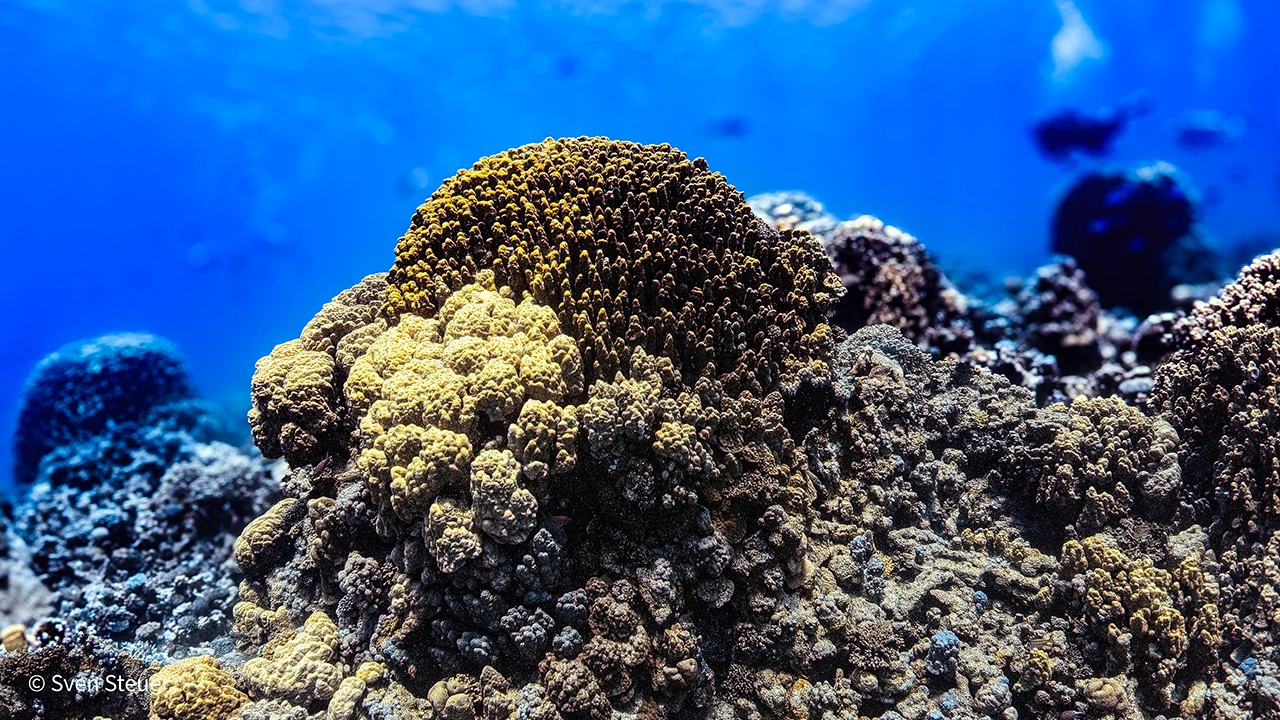
Regeneration on the reef
Young corals are recolonizing damaged areas, showing the natural capacity for recovery of many reefs.
Diver on Tour Knowledge
Observations on the recovery of reefs around Hurghada.
Young corals are recolonizing damaged areas, showing the natural capacity for recovery of many reefs.
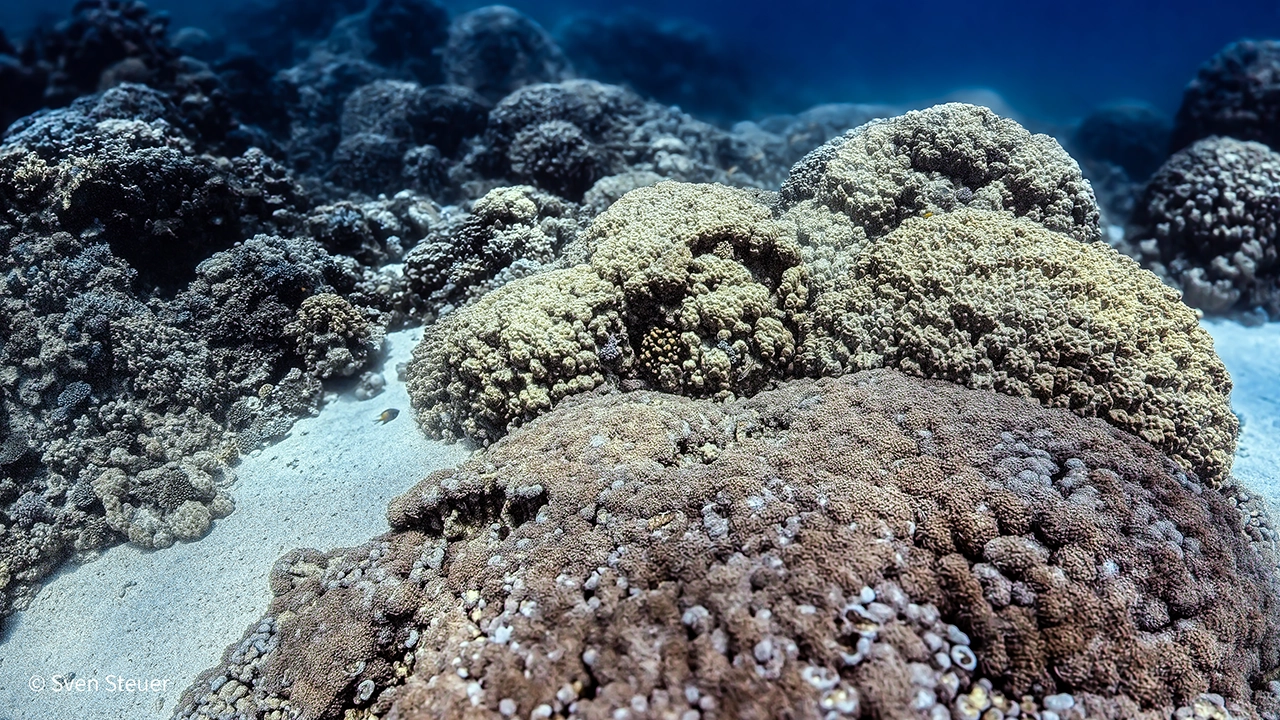
At several reefs off Hurghada, increasing coral cover and stable structures can be observed again.
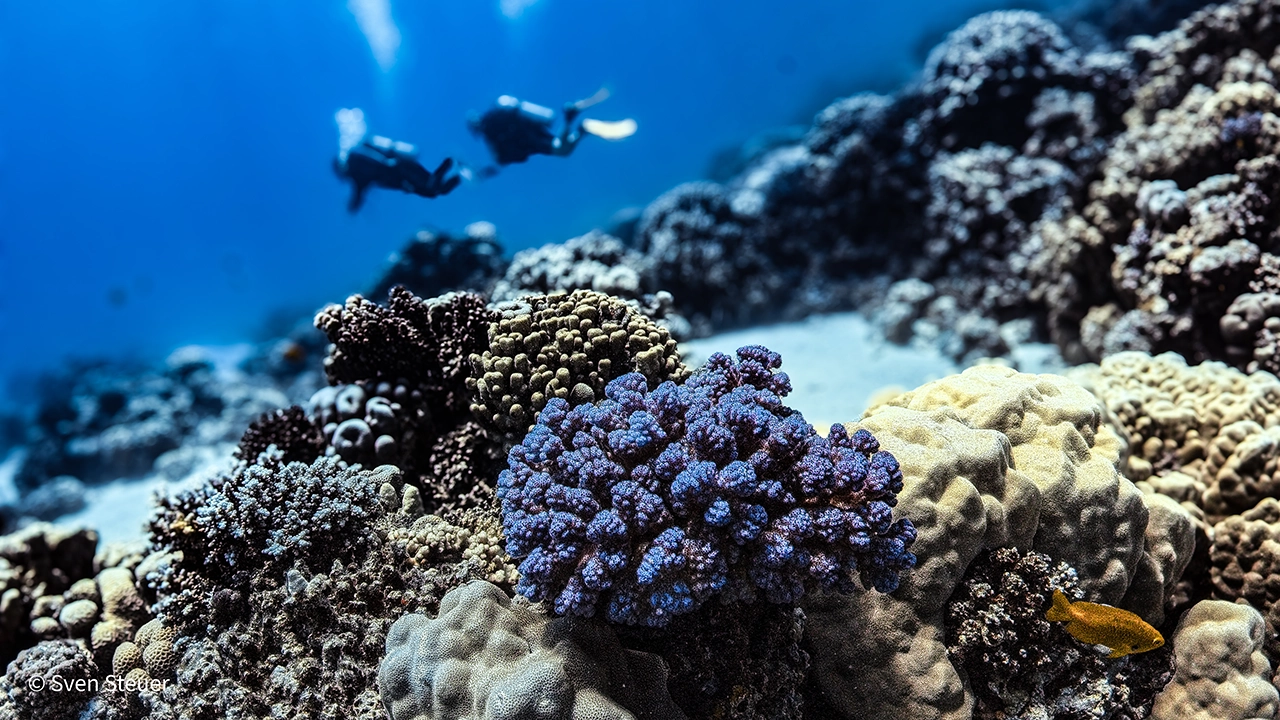
Photo documentation from Hurghada shows reef areas that now appear significantly more stable than in 2022–2023.
When people talk about coral reefs today, they usually talk about their decline. Images of bleached corals and reports of the worldwide decline of many reef systems shape public perception. Far less often do we hear about another part of reality: the ability of many reefs to recover under the right conditions.
This is exactly the development we can currently observe at several well-known reefs around Hurghada.
Dive sites such as Shaab Sabina, Gota Abu Ramada or Ham Ham now often look significantly different from just a few years ago. Areas that visibly lost coral cover between 2022 and 2023 are now showing renewed growth. Young coral colonies are recolonizing damaged areas, many hard corals show visible regeneration, and the overall structure of the reefs looks more stable today than it did a few years ago.
This development isn't just a subjective impression. Recent photo documentation from various dive sites clearly shows that many reef sections look healthier again today than during the period of stress from 2022 to 2023.
This observation becomes especially interesting in comparison with many regions further south in the Red Sea. While numerous reefs in the south still show considerable damage, some of the reefs around Hurghada appear significantly more stable. So developments within the Red Sea are by no means uniform.
One exception, for example, is Shaab Claude. There, too, I was able to observe visible recovery. It's precisely such differences that show how complex the ecological processes within the Red Sea really are. Some reefs recover surprisingly quickly, while others, despite a comparable geographic location, still show clear signs of stress.
Such differences are also described in scientific literature. Several studies indicate that parts of the northern Red Sea show exceptional resilience to environmental stress. Fine et al. described parts of the northern Red Sea as a possible thermal refuge. Osman et al. reached similar conclusions and described an exceptional resilience of many coral reefs in the northern Red Sea.
Alongside resilience, the capacity for regeneration is increasingly coming into focus. Water quality, currents, oxygen supply, nutrient transport and the overall stability of the ecosystem all play a decisive role.
Particularly striking in this context is a development that many divers, captains and operators in the Red Sea have been observing for about three years: a marked increase in wind and sea swell.
In the last two years especially, trips in the Red Sea have repeatedly had to be suspended for several days because of strong winds and corresponding safety warnings. Weather conditions like these were much less frequent in the past.
For the ecology of the Red Sea, however, wind matters more than is often assumed. Wind influences the mixing of water layers, current dynamics and the exchange between surface and deep water. Such processes can directly affect oxygen transport, nutrient distribution and the stability of marine ecosystems.
The Red Sea in particular is strongly shaped by its characteristic current dynamics. They carry water, oxygen, plankton and nutrients over long distances and thus have a considerable influence on the living conditions of coral reefs. Changes in wind and currents can therefore have a direct impact on how individual reef systems develop.
Current observations from Hurghada impressively show that coral reefs are by no means only systems in decline. Under the right conditions, they have a remarkable capacity to regenerate. The current development of several well-known reefs suggests that parts of the northern Red Sea are presently in a phase of recovery.
However, this must not be taken as an all-clear.
Coral reefs remain among the most sensitive ecosystems on our planet. While clear improvements can currently be observed around Hurghada, large parts of the southern Red Sea remain under heavy stress. The differences between individual regions instead show just how complex the interrelationships within this unique marine area really are.
Current observations should be neither ignored nor oversimplified. The visible recovery of numerous reefs off Hurghada does not prove that the problems of the Red Sea have been solved. It does show, however, that coral reefs can have a much greater potential for regeneration than is often assumed.
Perhaps this is exactly one of the most important insights of recent years: the development of coral reefs does not move in one direction only. Alongside decline and destruction, regeneration and recovery are also part of the reality of these ecosystems.
The images from Hurghada show exactly that.


